
Some children naturally walk into a new environment and immediately start talking to everyone around them. Others need more time. They may stay close to a parent, hesitate to join a group, speak quietly around unfamiliar people, or avoid activities where they feel they might be watched.
Being shy is not necessarily a problem that needs to be fixed. Every child has a different personality, and quieter children can be thoughtful, observant, creative, and deeply engaged with the world around them. However, when hesitation prevents a child from participating, making friends, trying new activities, or expressing themselves, parents may want to help them become more comfortable socially.
Kids martial arts can provide an excellent environment for that development.
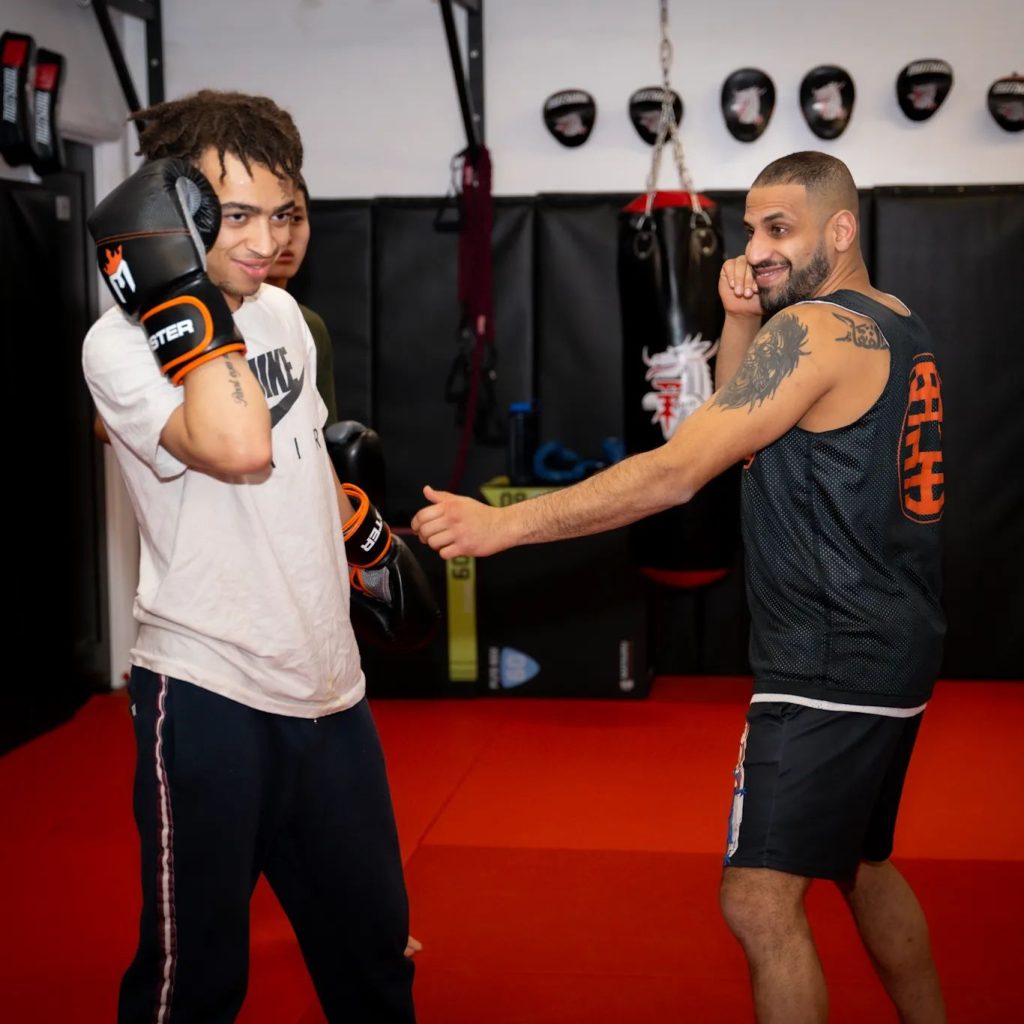
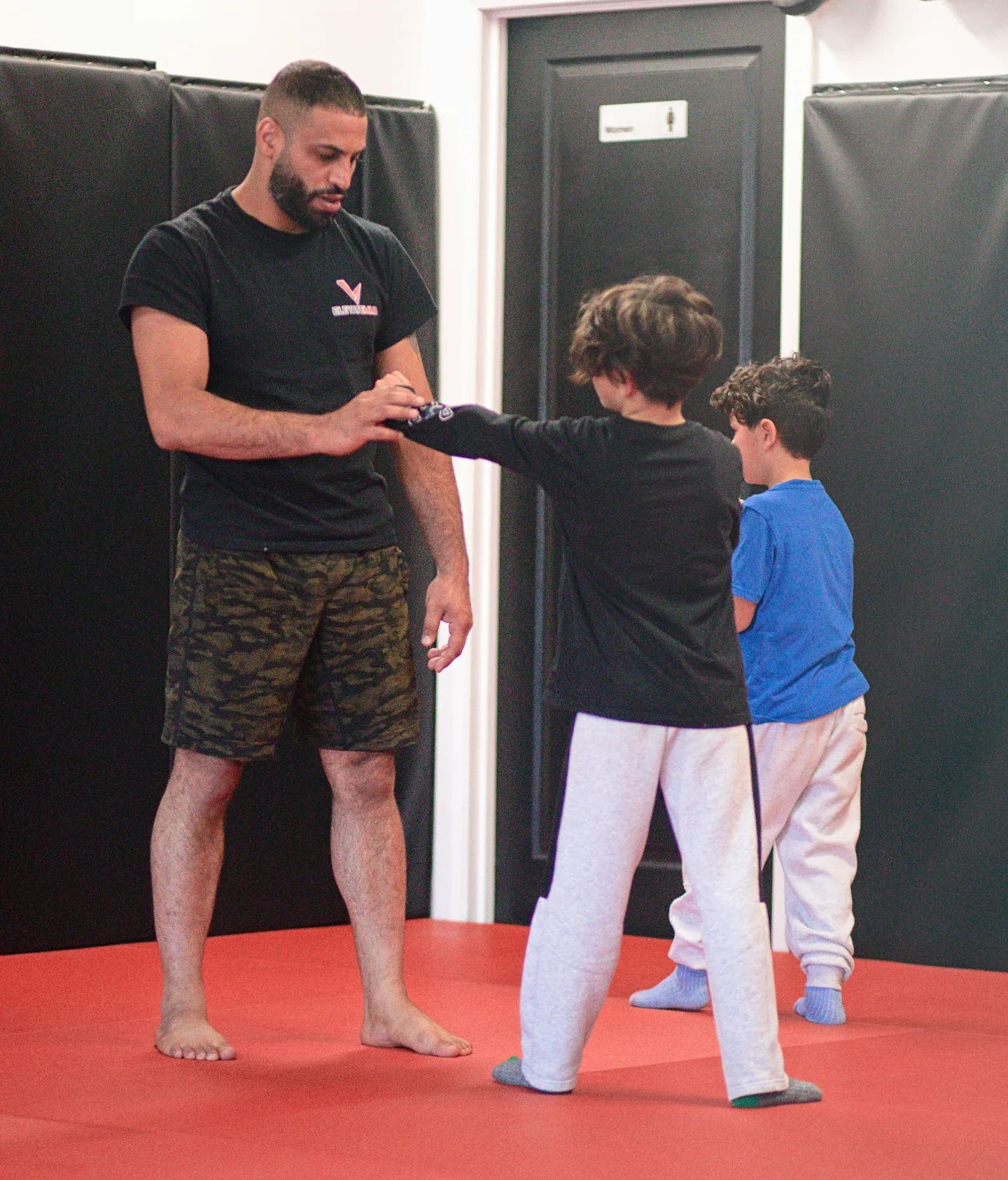
At Elevate MMA, our children’s martial arts training gives kids in Ottawa, Barrhaven, Stittsville, and surrounding communities opportunities to learn new skills, interact with others, overcome manageable challenges, and gradually become more confident in a structured setting.
The objective is not to turn a quiet child into the loudest person in the room. It is to help them feel secure enough to participate, communicate, and believe in themselves while still being who they are.
Social Confidence Is Different From Being Outgoing
It is important to distinguish confidence from extroversion.
A socially confident child does not necessarily need to talk constantly, seek attention, or enjoy being at the centre of every group.
Confidence can be much quieter.
It might mean being comfortable introducing themselves to a training partner, asking an instructor for clarification, joining a group activity without a parent beside them, or trying a technique even when they are unsure whether they will perform it perfectly.
For shy children, these seemingly small moments can represent meaningful progress.
Martial arts provides repeated opportunities to experience them.
Why Large Social Situations Can Feel Difficult
New social environments can involve many unknowns for children.
They may wonder who they will talk to, what they are expected to do, whether they will make a mistake, or whether other children are more experienced.
When there is little structure, a shy child may not know how to enter the group.
Martial arts classes are different because interaction has a purpose.
Children are not simply placed in a room and expected to socialize. A coach provides instructions, demonstrates an activity, organizes students, and gives everyone something specific to work on.
That structure can make participation feel much more manageable.
A Shared Activity Makes Conversation Easier
Making friends can be difficult when children do not know what to talk about.
In martial arts, they already have something in common.
They are learning the same movements, practicing similar techniques, listening to the same coach, and working toward their own improvement.
Conversation can develop naturally around the activity.
A child might ask a partner a question about a drill, congratulate someone after completing an exercise, or simply begin recognizing the same classmates each week.
Relationships do not have to be forced.
They can grow through familiarity and shared experience.
Familiarity Can Reduce Social Uncertainty
Consistency is especially valuable for children who take time to become comfortable around new people.
Returning to the same training environment each week gradually reduces uncertainty.
The room becomes familiar. The coaches become familiar. Other students become familiar. Class routines begin to make sense.
Instead of entering an unpredictable situation, the child starts knowing what to expect.
That familiarity can make it easier to participate independently.
A child who barely speaks during an early class may eventually begin greeting coaches, talking to classmates, volunteering during demonstrations, or helping newer students.
Those changes often happen gradually rather than all at once.
Confidence Starts With Small Achievements
Telling a shy child to “just be confident” rarely creates confidence.
Experience does.
Martial arts gives children opportunities to earn confidence through small accomplishments.
Perhaps they remember a technique without assistance. Maybe they complete a drill that initially seemed difficult. They might receive positive feedback from a coach or successfully work with a new partner.
Each experience sends an important message:
“I can do this.”
As those moments accumulate, children develop evidence that they are capable.
That can be much more powerful than reassurance alone.
Learning Without the Pressure to Be Perfect
Fear of making mistakes can contribute to social hesitation.
A child may avoid participating because they do not want other people to see them get something wrong.
Martial arts naturally challenges this idea because mistakes are part of learning.
Nobody performs every new technique perfectly the first time.
Students watch demonstrations, attempt movements, receive corrections, and try again.
When this process happens in a supportive environment, children begin learning that making a mistake does not have to be embarrassing.
It simply means there is something to practice.
That realization can reduce some of the pressure children place on themselves in other situations as well.
Coaches Can Become Important Sources of Encouragement
The relationship between a child and their coach can have a significant influence on their experience.
A good children’s martial arts instructor understands that not every student responds to the same teaching style.
Some children immediately volunteer.
Others prefer to observe before participating.
Professional coaching means recognizing these differences while still encouraging every child to progress.
At Elevate MMA, we want children to feel that their effort is noticed. Positive feedback for genuine improvement can help quieter students become increasingly comfortable engaging with coaches and participating in class.
Partner Drills Develop Communication Naturally
Martial arts frequently involves working with another student.
This creates a practical reason to communicate.
Children may need to listen to a partner, take turns, follow instructions together, or adjust what they are doing so both students can practice effectively.
These interactions teach more than martial arts technique.
They can help children practice listening, cooperation, patience, and respectful communication.
Because attention is focused on completing the activity, the social interaction may feel less intimidating than simply being told to “go make friends.”
Learning to Work With Different Personalities
Children will encounter many different personalities throughout school and eventually adult life.
Martial arts can expose them to classmates with different communication styles, abilities, ages, and experience levels.
One training partner may be energetic. Another may be quiet. One child may learn a technique quickly while another needs additional repetition.
Learning to work respectfully with different people develops social adaptability.
Children begin understanding that successful interaction does not require everyone to behave exactly like them.
Belonging Can Change How a Child Sees Themselves
Feeling that you belong somewhere can have a powerful influence on confidence.
When children attend martial arts regularly, they are not simply visiting an activity. Over time, they can begin seeing themselves as members of the training community.
They recognize people.
People recognize them.
Their progress becomes visible.
This sense of belonging can be especially meaningful for a child who has difficulty finding their place in other group environments.
Instead of wondering whether they fit in, they begin knowing that they do.
Physical Confidence Can Support Social Confidence
How children feel physically can influence how they carry themselves socially.
Martial arts encourages controlled movement, balanced posture, coordination, and awareness of the body.
As children become more capable physically, they may begin carrying themselves differently.
They may stand more comfortably, make better eye contact, speak more clearly, or participate with less hesitation.
These changes should never be forced.
The goal is not to teach children to perform confidence for other people. It is to help them genuinely feel more capable.
Learning Self-Defence Can Reduce Feelings of Helplessness
Some shy children may feel particularly uncomfortable with confrontation.
Martial arts can help them understand that self-defence involves more than physical techniques.
Awareness, boundaries, communication, staying calm, and knowing when to seek help are all important concepts.
Learning physical skills in a controlled environment can also help children feel less helpless.
The purpose is not to encourage fighting.
Responsible martial arts instruction teaches children that physical skills should be used carefully and appropriately.
Confidence should help children avoid unnecessary conflict, not seek it.
Respect Creates a Safer Social Environment
Children are more likely to participate when they feel respected.
Martial arts culture places significant emphasis on how students treat coaches and training partners.
Children learn that everyone deserves an opportunity to practice and improve.
That expectation can create an environment where quieter students have room to participate without feeling they must compete socially for attention.
Respect also teaches children how to interact appropriately with others even when they disagree or become frustrated.
These lessons have value far beyond the gym.
Learning to Speak Up
Confidence sometimes means being willing to use your voice.
During martial arts training, children may need to tell a coach they do not understand something, communicate with a partner, answer a question, or express when they need assistance.
For a naturally shy child, these moments can be valuable practice.
The stakes are relatively small, but the experience is real.
Each time the child successfully communicates, speaking up can become a little more familiar.
Eventually, that confidence may carry into school, extracurricular activities, and other social environments.
Handling Feedback Without Losing Confidence
Children need feedback in order to learn.
However, shy or highly self-conscious children can sometimes interpret correction as evidence that they have failed.
Martial arts can help change that relationship.
Technical correction is normal. Every student receives it because everyone has something to improve.
When feedback is delivered constructively, children begin understanding that being corrected does not mean they are bad at something.
It means someone is helping them get better.
Learning to receive guidance without becoming discouraged is an important skill for school, sports, future employment, and life generally.
Martial Arts Provides Individual Progress Within a Group
One reason martial arts can work well for quieter children is that it combines social participation with individual development.
Children train around other students, but their progress does not need to look identical.
They can improve their own technique, coordination, focus, and confidence while still being part of a group.
This can remove some of the pressure found in activities where one child’s mistake directly determines whether an entire team succeeds or fails.
The child still learns cooperation, but they also have personal goals they can work toward at their own pace.
What Parents May Notice Over Time
Social development is usually gradual.
Parents should not expect one martial arts class to completely transform a child’s personality.
Instead, progress may appear through small behavioural changes.
A child who once refused to enter without a parent may eventually walk in independently. Someone who avoided partner activities may begin participating without hesitation. A child who never asked questions may start approaching the coach when they need help.
Eventually, parents may notice similar changes elsewhere.
Their child might participate more comfortably at school, introduce themselves to another child, speak more clearly around adults, or become more willing to try unfamiliar activities.
These small developments can represent substantial growth.
Why Consistency Matters
Confidence develops through repeated positive experiences.
Attending sporadically can make it harder for a shy child to develop familiarity with the environment and other students.
Consistent attendance gives them opportunities to build relationships gradually.
It also allows them to see their own technical progress.
After several months, movements that once seemed impossible may become familiar. Students who were strangers may become training partners and friends.
This provides powerful evidence that unfamiliar situations can become comfortable with enough time and participation.
Parents Can Support the Process Without Adding Pressure
Parents naturally want to see their children succeed, but pushing too aggressively can sometimes make shy children more self-conscious.
It can be more helpful to recognize genuine effort.
Instead of focusing only on whether the child performed a technique perfectly, parents can acknowledge that they tried something unfamiliar, participated with a new partner, listened carefully, or stayed engaged through a challenging activity.
This keeps attention on growth rather than comparison.
Every child develops at a different pace.
Some may become comfortable within a few classes. Others may need considerably longer.
Both experiences are valid.
Kids Martial Arts Can Provide an Alternative to Screen Time
Many children spend significant portions of their free time using phones, tablets, computers, and gaming systems.
Technology has plenty of useful purposes, but digital interaction does not always provide the same social experiences as communicating face-to-face.
Martial arts gets children moving and interacting directly with other people.
They listen, respond, cooperate, observe body language, and participate in shared activities.
These experiences give children opportunities to practice social abilities that cannot be developed entirely through a screen.
Confidence Without Comparison
One of the healthiest forms of confidence comes from recognizing personal improvement rather than constantly comparing yourself with someone else.
There will always be children who are faster, stronger, more experienced, or more outgoing.
Martial arts gives students an opportunity to focus on becoming better than they were previously.
Can they perform a movement more accurately than last month?
Are they more comfortable participating?
Can they remember something that once seemed confusing?
This approach helps children build confidence from their own progress rather than needing to outperform someone else.
From Quiet Beginner to Positive Role Model
One particularly rewarding stage can occur when a once-shy student becomes experienced enough to help someone new.
Suddenly, they understand exactly how the beginner feels.
They remember being uncertain.
Now they can offer encouragement, demonstrate good behaviour, or help a new training partner feel included.
This shift can strengthen confidence tremendously.
The child is no longer only receiving support. They are becoming capable of providing it.
That is an important step toward leadership.
Why Families in Ottawa, Barrhaven, and Stittsville Are Exploring Kids Martial Arts
Parents choose martial arts for many reasons.
Some want their children to become more physically active. Others are interested in discipline, self-defence, coordination, or focus.
For families with quieter children, the social environment can become equally valuable.
Martial arts provides structured interaction rather than unstructured social pressure. Children have a shared activity, clear expectations, supportive coaching, and repeated opportunities to participate.
Over time, this combination can help a hesitant child become increasingly comfortable expressing themselves and engaging with others.
Helping Children Grow Without Changing Who They Are
A shy personality is not something that needs to disappear.
A child can remain thoughtful, reserved, and quiet while becoming considerably more confident.
That distinction matters.
The purpose of martial arts should never be to force a child into a different personality. Instead, training can give them tools and experiences that make social situations feel less intimidating.
Confidence gives children choices.
They can speak when they have something to say. They can join an activity they want to try. They can ask for help when they need it. They can meet unfamiliar people without allowing nervousness to completely control the experience.
That is meaningful social growth.
Build Confidence Through Kids Martial Arts at Elevate MMA
At Elevate MMA, our kids martial arts classes provide more than an opportunity to learn physical techniques. We create a structured training environment where children can practice communication, cooperation, focus, respect, and perseverance while developing their martial arts abilities.
For shy children in Ottawa, Barrhaven, Stittsville, and surrounding communities, regular training can provide manageable opportunities to become comfortable around others without demanding that they suddenly become outgoing.
The first achievement might simply be walking onto the mats.
Then it might be working with a new partner.
Later, it could be asking a question, demonstrating a technique, encouraging another student, or welcoming a new child into class.
Those small moments can gradually build the kind of confidence that follows a child far beyond martial arts training.