
Starting mixed martial arts can feel intimidating when you are completely new. You may picture experienced athletes sparring at high intensity, complicated grappling techniques, or conditioning sessions designed for professional fighters. That image can make beginners wonder whether they need to get fit, learn another martial art, or somehow prepare themselves before walking into an MMA gym.
The reality is very different when beginner training is approached properly.
Mixed martial arts combines skills from striking and grappling disciplines, creating a varied training experience that develops coordination, fitness, technique, and body awareness. Beginners do not need to learn everything immediately. They need a structured environment where fundamentals are introduced gradually and safety remains a priority.
At Elevate MMA, we provide martial arts training for people in Ottawa, Orleans, Gloucester, and surrounding communities who are starting at different ages, fitness levels, and experience levels. Our focus is on helping students build strong fundamentals before expecting greater speed, intensity, or technical complexity.
You Do Not Need Experience to Begin MMA
One of the biggest misconceptions about mixed martial arts is that beginners should already know how to fight.
That defeats the purpose of training.
You join a martial arts gym because you want to learn.
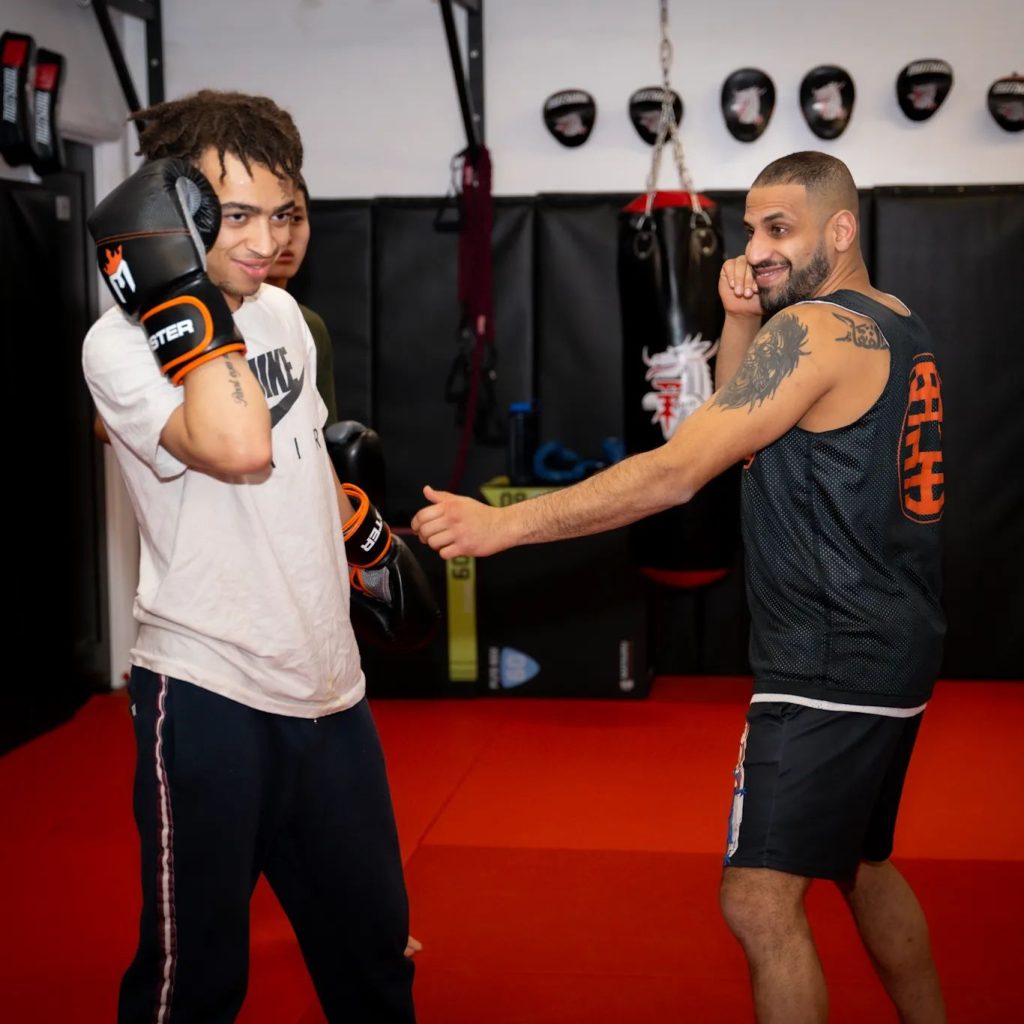
Your first classes are not supposed to look like the training of someone who has practiced for several years. Beginners need time to understand basic stance, movement, balance, defensive awareness, striking mechanics, and grappling positions.
Feeling awkward initially is completely normal.
The movements are new, the terminology may be unfamiliar, and your body is being asked to coordinate actions it has probably never performed before.
The objective during this stage is learning—not proving yourself.
MMA Training Is Not the Same as an MMA Fight
This distinction is particularly important for newcomers.
Training MMA does not mean walking into a gym and immediately participating in a fight.
Competition represents only one aspect of mixed martial arts. Someone can train because they enjoy learning, want a more engaging workout, are interested in self-defence, or simply want a challenging new hobby.
Beginner instruction should introduce skills under controlled conditions before more demanding applications are considered. Martial arts carry genuine injury risks, so responsible progression, appropriate supervision, proper equipment, and attention to technique matter. Orthopaedic guidance similarly recommends learning new techniques under supervision and initially practicing unfamiliar movements at reduced speed. (OrthoInfo)
Start With Movement Before Intensity
New students sometimes want to move as quickly or powerfully as experienced practitioners.
Speed should not be the first objective.
Control should.
If a student cannot perform a movement correctly at a manageable pace, increasing speed usually does not solve the problem.
Early MMA training should give beginners time to understand how their bodies move.
A striking stance, for example, provides the foundation for punches, kicks, defensive movement, and footwork. In grappling, posture, balance, positioning, and basic movement provide a foundation for more complicated techniques.
Learning these fundamentals patiently makes later development considerably easier.
Technique Should Come Before Power
Hitting harder can feel satisfying, particularly during bag and pad work, but beginners should resist making power their primary measurement of progress.
Good technique develops first.
Students need to understand alignment, balance, distance, rotation, and recovery.
A punch should not leave someone falling forward. A kick should not completely destroy their balance. A grappling movement should not rely entirely on explosive strength.
The better students understand mechanics, the more efficiently they can eventually produce speed and power.
This approach can also reduce unnecessary strain. Improper technique, excessive intensity, and fatigue can contribute to martial arts injuries. (OrthoInfo)
Learn the Different Parts of MMA Gradually
Mixed martial arts is challenging because it brings multiple skill sets together.
Students may eventually work on striking, takedowns, positional grappling, submissions, defence, and transitions between different ranges.
Trying to understand everything simultaneously would overwhelm almost anyone.
Beginners benefit from breaking the sport into manageable pieces.
One session might emphasize striking fundamentals. Another might focus on basic grappling positions. Over time, students begin understanding how these areas connect.
It is similar to learning a language.
You learn vocabulary and basic sentences before expecting yourself to have an advanced conversation.
Warm-Ups Have a Purpose
It can be tempting to view the warm-up as something standing between you and the “real” training.
It is part of the training.
A good warm-up gradually prepares the body for the movements that will follow.
Depending on the class, this might include mobility work, controlled movement patterns, technical exercises, or activities designed to raise body temperature.
For beginners, warm-ups can also introduce movements that appear later in class.
Instead of rushing through this portion, use it as an opportunity to understand how your body feels that day.
Tell Your Coach You Are New
There is absolutely no benefit in pretending to understand something you do not.
Tell the coach when you are attending your first classes.
If an instruction is unclear, ask.
If you have limitations that affect your ability to perform an exercise safely, communicate them appropriately.
Good coaching depends partly on understanding the student.
The instructor can explain unfamiliar terminology, modify an exercise where appropriate, or pair a newcomer with a suitable training partner.
Communication makes the learning environment better for everyone.
Do Not Compare Your First Month With Someone Else’s Fifth Year
This is one of the easiest mistakes to make.
You may see another student move smoothly between techniques while you are still thinking about where your feet should go.
That difference does not mean you lack ability.
It means they have practiced longer.
Martial arts exposes the value of repetition very clearly. Experienced students make difficult movements appear natural because they have performed them many times.
Instead of comparing yourself with them, pay attention to changes in your own performance.
Maybe you remember a combination that confused you last week. Perhaps you can finish the warm-up more comfortably. Maybe your stance feels more natural.
Those are legitimate signs of improvement.
Control Your Training Intensity
Motivation is excellent.
Trying to accomplish three months of progress during your first week is not.
A common beginner mistake is starting with excessive intensity because everything feels exciting. The student attends as many sessions as possible, pushes through severe fatigue, and ignores the fact that their body has not adapted to the new workload.
Consistency is more valuable than a short burst of extreme effort.
Research on BJJ, one component often used in MMA training, shows that injuries do occur during training and that sparring is an important area for prevention efforts. (PubMed Central (PMC))
Starting progressively gives your muscles, joints, cardiovascular system, and nervous system time to adapt.
Understand the Difference Between Discomfort and Injury
Exercise can be uncomfortable.
Muscles become tired. Cardiovascular training can be demanding. New movements can create normal post-exercise soreness.
Pain suggesting an injury is different.
Do not treat ignoring injuries as evidence of toughness.
If something feels wrong, stop and communicate with your coach. When appropriate, seek advice from a qualified healthcare professional.
Returning prematurely after an injury can create additional problems. The American Academy of Orthopaedic Surgeons advises that athletes should have symptoms resolved before returning to activity and that suspected concussion requires appropriate medical clearance. (OrthoInfo)
Your long-term ability to train matters more than completing one session.
Learn How to Train With a Partner
Training partners are an important part of MMA.
They are not enemies.
During technical practice, both students should be trying to create an environment where learning can happen safely.
That requires communication and control.
When drilling a new technique, there is rarely a reason to perform it with uncontrolled force. Students should follow the coach’s instructions regarding resistance and intensity.
Good training partners help each other improve.
This attitude creates a healthier gym culture and makes martial arts more enjoyable for beginners and experienced students alike.
Tapping Is a Safety Skill
When beginners start grappling, one of the most important concepts to understand is tapping.
A tap communicates that the partner should immediately release the submission or position being applied.
There is no shame in tapping.
It is a normal part of grappling training.
Trying to tolerate a submission because you do not want to “lose” can turn an ordinary training exchange into an unnecessary injury.
Safety guidance for martial arts specifically emphasizes understanding submission risks and recognizing when to tap. (OrthoInfo)
Learning to tap early and respect another person’s tap immediately is part of responsible training.
Sparring Should Not Be a Test of Toughness
Sparring has an important role in martial arts because it eventually allows students to practice timing, distance, decision-making, and technique against someone who is responding dynamically.
But sparring should have a purpose.
For beginners, immediately participating in uncontrolled, high-intensity exchanges is not necessary for learning fundamentals.
Students need enough technical understanding to participate productively.
Intensity should also match the drill, experience level, and coaching instructions.
This is particularly important with striking because head impacts can cause concussion and other injuries. Martial arts injury-prevention guidance identifies head and facial injuries as risks in striking disciplines. (OrthoInfo)
Being able to train hard does not mean every training session needs to be hard.
Use Appropriate Protective Equipment
Equipment requirements vary depending on what you are practicing.
For striking activities, coaches may recommend appropriate gloves, hand wraps, mouthguards, shin protection, or other equipment depending on the drill.
Correct equipment does not eliminate all risk, but it is an important part of responsible training.
The AAOS specifically recommends protective measures such as properly wrapped hands, appropriate gloves, and mouthguards for relevant martial arts activities. (OrthoInfo)
Beginners should ask their coach what they actually need rather than purchasing random equipment before understanding the program.
Keep Your Training Gear Clean
Hygiene matters when people are sharing mats and training in close contact.
Arrive in clean training clothes, keep your equipment clean, maintain good personal hygiene, and follow the gym’s rules regarding footwear and mat use.
Fingernails and toenails should also be kept appropriately trimmed for close-contact training.
If you have a contagious skin condition or illness, staying away from close-contact training until it is appropriately addressed protects your teammates as well as yourself.
A responsible martial arts community depends on everyone doing their part.
Hydration and Recovery Matter
The training session itself is only part of becoming better.
Recovery matters too.
MMA can challenge muscles and cardiovascular conditioning in ways beginners are not accustomed to. Giving the body sufficient time to recover helps make consistent training more realistic.
Sleep, hydration, appropriate nutrition, and rest between demanding sessions all contribute to recovery.
Beginners sometimes underestimate this because enthusiasm is high.
But the goal is not to see how exhausted you can become.
The goal is to create a routine you can sustain.
You Do Not Need to Be in Great Shape Before Starting
Another common thought is:
“I’ll get fit first, then I’ll join MMA.”
You can certainly improve your general fitness before beginning, but you do not need to reach some imaginary athletic standard before taking your first class.
Martial arts fitness is specific.
Someone can be a good runner and still become tired during grappling. A strong weightlifter may discover that striking combinations challenge their coordination and cardiovascular endurance differently.
Training develops the type of conditioning the activity requires.
Beginners simply need to start at an appropriate level and allow fitness to improve progressively.
Focus on Breathing
When people become nervous or tired, they often hold their breath.
Beginners commonly do this while striking, grappling, or attempting an unfamiliar technique.
The result is usually faster fatigue.
Learning to breathe while moving helps students remain calmer and use energy more efficiently.
You do not need complicated breathing techniques during your first week.
Simply becoming aware of unnecessary tension and remembering to breathe can make a noticeable difference.
Avoid Trying Advanced Techniques Too Soon
Social media can make complicated martial arts techniques look incredibly appealing.
You might see spinning strikes, dynamic takedowns, or advanced submissions and immediately want to try them.
Fundamentals are less glamorous but far more important.
A strong stance, reliable defence, controlled footwork, basic positioning, and simple escapes provide the foundation upon which advanced techniques are built.
Complex techniques attempted without proper instruction can also increase unnecessary risk.
Beginners should trust the progression established by their coaches rather than trying to reproduce advanced movements they saw online.
Your Ego Can Be One of the Biggest Safety Risks
Martial arts places people in unfamiliar situations.
Someone smaller may understand a technique better. Another beginner may learn a movement more quickly. An experienced training partner may control you easily.
That can be uncomfortable.
But trying to compensate by becoming reckless, using excessive force, or refusing to tap creates unnecessary risk.
A productive training mindset accepts that being inexperienced is temporary.
You are there to learn.
Being willing to make mistakes is not weakness. It is how skill develops.
Learn Defence Alongside Offence
Beginners naturally become excited about punches, kicks, takedowns, and submissions.
Defence deserves equal attention.
Learning how to protect yourself, maintain good positioning, recover balance, escape safely, and recognize dangerous situations creates a stronger foundation.
Defence also helps beginners become more relaxed.
When you understand what to do from an uncomfortable position, panic begins to decrease.
That composure makes learning easier.
Give Your Body Time to Adapt
The first several weeks of MMA can feel physically demanding.
You are performing unfamiliar movements and using muscles in unfamiliar ways.
Progress may initially happen quickly because almost everything is new, but adaptation still takes time.
Avoid interpreting ordinary beginner difficulty as evidence that MMA is not for you.
Coordination improves.
Fitness develops.
Techniques become familiar.
Movements that required intense concentration eventually begin feeling more natural.
The important ingredient is consistent, intelligent practice.
Choose the Training Environment Carefully
Beginners should pay close attention to gym culture.
A good environment should make you feel comfortable asking questions and admitting that you do not understand something.
Coaches should emphasize technical development rather than reckless intensity.
Experienced students should treat beginners as training partners, not targets.
Safety expectations should be clear.
The physical training area should also be appropriate for the activity. Injury-prevention recommendations include adequate matting, awareness of surrounding participants, appropriate supervision, and emergency preparedness. (OrthoInfo)
The environment you choose can have a major influence on whether your first experience with martial arts becomes positive and sustainable.
Set Realistic Goals for Your First Few Months
You do not need to become an MMA expert immediately.
A better early goal is becoming comfortable with the fundamentals.
Try to improve your stance.
Learn basic terminology.
Develop better balance.
Understand how to work safely with partners.
Improve your conditioning gradually.
Attend consistently.
Small objectives create achievable milestones and prevent beginners from becoming frustrated by unrealistic expectations.
After several months, you may be surprised by how much has changed.
MMA Can Become More Than a Workout
Many people initially explore mixed martial arts because they want to become fitter.
They stay because learning becomes rewarding.
There is always another technical detail to understand, another movement to improve, or another challenge to solve.
That makes training fundamentally different from exercise programs based entirely on repetitions.
You are developing a skill.
Fitness becomes part of that process.
Over time, students may also notice improvements in confidence, patience, discipline, coordination, and their ability to remain composed while facing difficult situations.
Starting MMA in Ottawa, Orleans, and Gloucester
If you live in Ottawa, Orleans, Gloucester, or a nearby community, starting martial arts does not require waiting until you are stronger, leaner, fitter, or more confident.
Those can become outcomes of training rather than prerequisites for it.
What matters most is approaching the process correctly.
Begin with fundamentals. Listen to your coaches. Respect your training partners. Control your intensity. Give your body adequate recovery. Ask questions when you are uncertain, and resist the temptation to rush into advanced techniques before you are ready.
Martial arts involve real physical risks, but structured instruction, appropriate equipment, sensible progression, and responsible training practices can help manage those risks. (OrthoInfo)
Start Your Martial Arts Journey at Elevate MMA
At Elevate MMA, we provide a structured environment where beginners can develop martial arts skills progressively while learning how to train responsibly.
Our training gives students opportunities to develop striking, grappling, conditioning, coordination, and confidence without expecting newcomers to arrive with previous experience.
If you are in Ottawa, Orleans, Gloucester, or the surrounding area and have been thinking about trying MMA, you do not need to wait until you feel completely ready.
Your first goal is simply to learn.
From there, every class gives you another opportunity to improve your technique, understand your body better, increase your fitness, and become more comfortable on the mats.