

Parents spend a lot of time reminding children to listen. Listen to your teacher. Listen when instructions are being given. Listen before crossing the street. Listen when someone else is speaking. Yet listening is more complicated than simply hearing words.
Children need to pay attention, understand what is being communicated, remember important details, and then respond appropriately. Those abilities develop over time, and like many other skills, they benefit from practice.
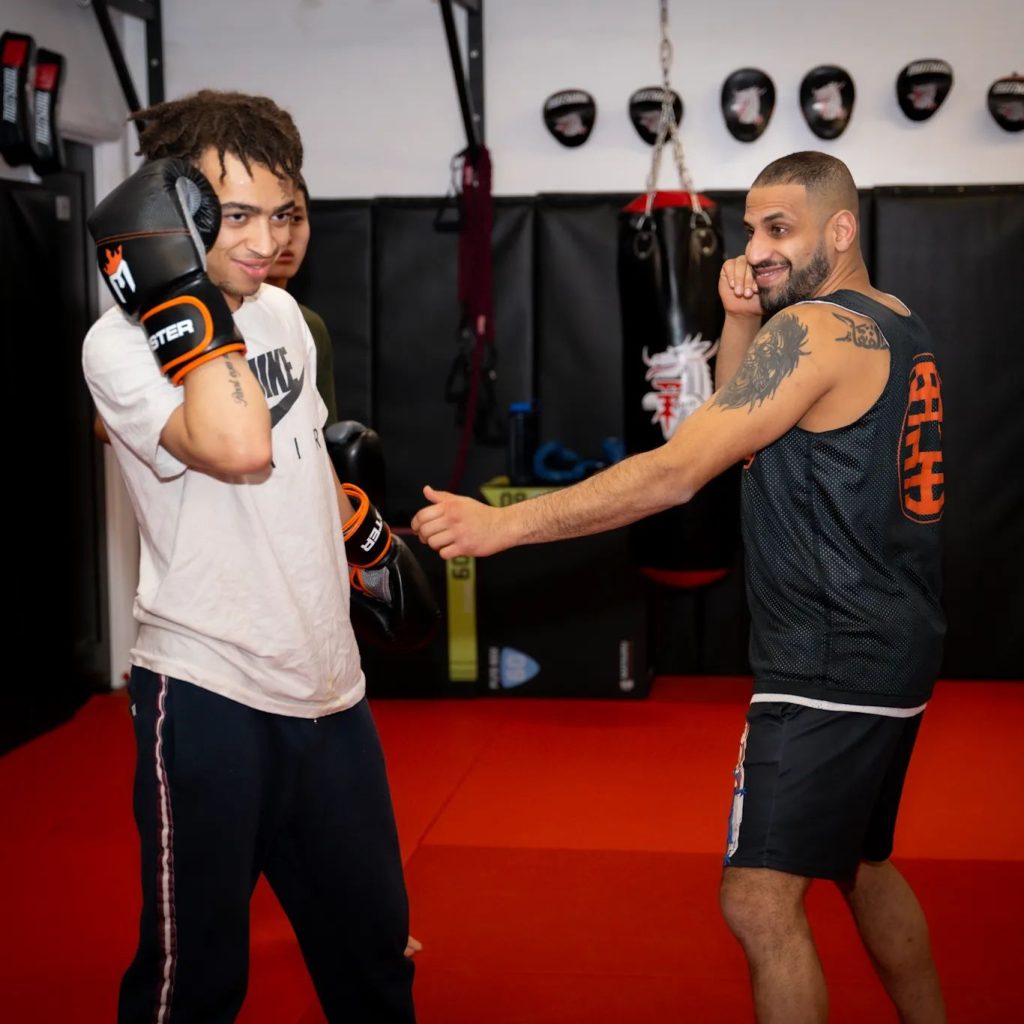
Martial arts provides children with an environment where listening has an immediate and practical purpose. When a coach demonstrates a technique, students need to pay attention to understand what comes next. When instructions change during a drill, children have to recognize the change and adjust. During partner activities, they also need to listen to the person training with them.
At Elevate MMA, our kids martial arts training gives children in Ottawa, Gloucester, Orleans, and surrounding communities opportunities to develop these habits while learning physical skills, staying active, and enjoying a structured training environment.
Listening Is More Than Staying Quiet
A child can sit silently while someone speaks without actually processing what is being said.
Effective listening requires active attention.
The child needs to notice the instruction, understand it, remember enough information to act on it, and recognize when clarification is needed.
Martial arts makes this process visible.
A coach may demonstrate a movement and explain several important details. Students then need to perform what they observed.
If they were paying attention, they have information they can use.
If they missed part of the explanation, the difficulty often becomes obvious once the activity begins.
This creates natural feedback without turning listening into a lecture about behaviour.
Martial Arts Gives Children a Reason to Pay Attention
Children often listen better when the information matters to something they genuinely want to do.
That is one advantage of martial arts.
Students want to learn the technique.
They want to participate in the drill.
They want to improve.
Listening therefore becomes connected to something meaningful.
Instead of hearing, “Pay attention because I said so,” children begin discovering for themselves that paying attention helps them succeed.
That connection between listening and results can make the skill easier to understand.
Watching Is Part of Listening
Martial arts instruction is highly visual.
Children do not only listen to a coach’s words. They also watch how the coach moves.
Where are the feet positioned?
Which hand moves first?
How does the body turn?
Where does the student finish the movement?
Children then combine what they heard with what they saw.
This type of learning encourages them to pay attention to multiple forms of information at once.
For some children, physically seeing a concept demonstrated can make instructions easier to understand than verbal explanations alone.
Following Multi-Step Instructions
As children progress in martial arts, instructions can become more detailed.
A beginner might initially learn one simple movement.
Later, several movements may be connected into a sequence.
The student now has to remember what happens first, what follows, and how each part connects to the next.
That requires attention and working memory.
Rather than asking children to memorize information with no context, martial arts gives the sequence a physical meaning.
They hear it, see it, and then perform it.
Repeated practice can help children become more comfortable following instructions that contain several steps.
Immediate Feedback Makes Listening Meaningful
One advantage of martial arts is that feedback happens quickly.
Suppose a coach demonstrates a movement and emphasizes keeping a particular stance.
When practice begins, a student who forgot that detail may immediately notice that the movement feels awkward or unbalanced.
The coach can provide a correction, and the student tries again.
The relationship becomes clear:
Listen. Try. Adjust. Improve.
Children begin understanding that instructions are not random rules. Details are often provided because they help something work more effectively or safely.
Kids Learn to Listen Even When They Are Excited
Listening when everything is calm can be relatively easy.
Listening when you are excited is more challenging.
Martial arts classes can be energetic. Children are moving, practicing skills, and interacting with other students.
Yet when the coach begins explaining the next activity, students need to shift their attention.
That transition is valuable.
They are practicing how to move from excitement into concentration without needing an extended period to settle down.
Over time, becoming comfortable with that switch can strengthen a child’s ability to regulate attention in structured environments.
Learning When It Is Time to Move and When It Is Time to Listen
Children naturally want to move.
Martial arts does not ask them to suppress that energy for an entire class.
Instead, it creates a rhythm between movement and attention.
There are moments for practicing.
There are moments for watching.
There are moments for asking questions.
There are moments for working with a partner.
Understanding these transitions helps children recognize that different situations require different behaviours.
That awareness is an important part of becoming a more independent learner.
Repetition Helps Listening Become a Habit
A single reminder rarely creates a lasting habit.
Martial arts gives children repeated opportunities to practice attentive behaviour.
Every class involves instructions.
Every new technique requires observation.
Every drill has expectations.
Every correction requires the student to process new information.
Because these situations happen repeatedly, listening is reinforced naturally through participation.
The child is not attending a class specifically called “How to Listen.”
They are practicing listening because it is necessary to learn martial arts.
Coaches Provide Another Adult Voice
Parents and teachers are often the adults children hear from most frequently.
A martial arts coach introduces another positive authority figure.
This can be valuable because the same principles children hear at home may be reinforced in a different environment.
A coach may ask students to wait their turn, concentrate during instruction, treat others respectfully, or complete something carefully rather than rushing.
Hearing similar expectations from multiple trusted adults can help children understand that these behaviours are not rules that exist only at home or school.
They are useful habits in many parts of life.
Listening to Corrections Without Becoming Discouraged
Learning any skill involves correction.
A coach might adjust a child’s stance, movement, positioning, or timing.
The child then has a choice.
They can ignore the correction, become frustrated, or listen and try to apply it.
Martial arts provides repeated experience with the third option.
Children gradually learn that correction does not necessarily mean they have done something “bad.”
It often means they are being shown how to improve.
This distinction can be particularly valuable for children who become discouraged when they do not get something right immediately.
Good Listening Includes Asking Questions
Listening does not mean silently accepting information you do not understand.
Sometimes good listening leads to a question.
A child may hear the instructions but still be uncertain about one step.
Learning to ask for clarification is a useful skill.
At Elevate MMA, we want students to understand what they are learning rather than simply imitate movements without thinking.
When children become comfortable asking appropriate questions, they become more active participants in their own development.
That can help build independence as learners.
Partner Training Requires Two-Way Communication
Children also need to listen to people their own age.
Partner activities provide opportunities to practice this.
One student may need to communicate that they are ready.
Another may need to explain that something needs to slow down.
Students may take turns completing a drill or help each other remember instructions.
These interactions teach children that communication is not simply about waiting for their opportunity to speak.
They also need to notice what another person is saying.
That helps develop cooperation alongside technical skill.
Listening Is Important for Safe Training
Martial arts involves physical movement, which makes following instructions particularly important.
Children need to understand where to stand, when to begin, when to stop, how a technique should be practiced, and what level of intensity is appropriate.
Ignoring those instructions can affect both the student and their training partner.
This gives listening a responsibility component.
Children begin recognizing that paying attention is not only about their own success.
Sometimes other people are depending on them to follow directions correctly.
Learning to Control the Urge to Rush
Children can become excited when they think they already know what comes next.
They may want to begin before the coach has finished explaining.
Martial arts provides many opportunities to work on this habit.
A student may recognize the first part of a technique but miss an important detail introduced later in the demonstration.
They gradually discover that starting early is not necessarily the same as learning quickly.
Sometimes the fastest way to improve is to slow down long enough to understand the complete instruction.
Focus Becomes Connected to Performance
Martial arts provides a very practical demonstration of what concentration can accomplish.
When a child is distracted, movements may feel confusing.
When they concentrate on the explanation and practice deliberately, things often begin making more sense.
Children can therefore experience the value of focus rather than simply being told that concentration is important.
That experience matters.
Abstract advice becomes something they can feel in their own performance.
Martial Arts Can Challenge Short Attention Spans Gradually
Not every child arrives able to concentrate for long periods.
That should not automatically prevent them from participating.
Structured martial arts training can introduce attention in manageable pieces.
Listen to one explanation.
Practice the movement.
Return for the next instruction.
Try again.
Instead of expecting children to remain completely still and attentive for an extended lecture, martial arts alternates concentration with activity.
For children who learn well through movement, that format can be particularly engaging.
Remembering Instructions Builds Independence
Early in training, a child may need frequent reminders.
Where should they stand?
What happens next?
Which movement are they practicing?
With repetition, those reminders can decrease.
The student begins remembering routines and expectations independently.
That represents more than martial arts progress.
The child is taking greater responsibility for their own participation.
They no longer need an adult to guide every small action.
This growing independence can be one of the most rewarding changes for parents to observe.
Listening and Self-Control Work Together
Attention and self-control are closely connected during martial arts training.
A child may understand an instruction perfectly but still need to control the impulse to act before the appropriate moment.
For example, they may need to wait while another student practices.
They might need to reduce their speed during a technical drill.
They may have to stop immediately when the coach gives a signal.
Listening provides the information.
Self-control allows the child to act on it appropriately.
Practicing both together can help children become more thoughtful participants in class.
Children Learn That Details Matter
Martial arts techniques often depend on details.
A small change in foot placement can affect balance.
Hand position can influence defence.
Moving too early or too late can change the effectiveness of a technique.
This teaches children that listening carefully matters because small pieces of information can have a purpose.
Instead of only listening for the general idea, students become encouraged to notice specifics.
That attention to detail can become increasingly valuable as techniques become more advanced.
Focus Without Expecting Perfection
Children will become distracted sometimes.
That is normal.
The goal should not be to expect perfect concentration during every second of every class.
The more useful objective is helping children recognize when their attention has wandered and learn how to bring it back.
Martial arts provides plenty of opportunities to practice this reset.
A coach redirects the student.
The child refocuses.
Training continues.
Over time, students may become better at making that adjustment themselves.
Listening Helps Children Learn Faster
A child who develops better listening habits can often make more productive use of training time.
They understand the drill sooner.
They remember more of the demonstration.
They can apply corrections with fewer repetitions.
This does not mean they will master every technique immediately.
Martial arts still requires patience and practice.
But stronger listening skills can make that practice more purposeful.
The child spends less time wondering what they are supposed to be doing and more time actually working on the skill.
Martial Arts Provides a Break From Passive Entertainment
Children receive enormous amounts of information from screens.
Videos, games, social media, streaming services, and digital entertainment can all compete for attention.
Martial arts requires a different kind of engagement.
The child cannot simply watch.
They need to participate.
They listen to an explanation, observe a demonstration, move their own body, communicate with partners, and respond to feedback.
This active involvement can make after-school time feel very different from passive entertainment.
Confidence Can Make Children More Comfortable Communicating
Listening and communication go together.
As children become more comfortable in the training environment, they may also become more willing to speak appropriately.
A child who initially stays quiet may eventually ask the coach a question.
They may communicate more clearly with a training partner.
They may volunteer an answer when the coach asks the class something.
The objective is not to make every child outgoing.
It is to help them become comfortable enough to communicate when communication is necessary.
The Connection Between Listening and Respect
Listening is one of the clearest ways children can demonstrate respect.
When another person is speaking, giving them attention communicates that what they are saying matters.
Martial arts reinforces this regularly.
Students listen when coaches explain.
They listen when partners communicate.
They wait while other people have their turn.
Respect therefore becomes something children practice through behaviour rather than simply a word adults tell them is important.
What Parents May Notice Outside the Gym
Parents naturally want to know whether skills practiced in martial arts can influence everyday life.
Every child is different, and no martial arts program can guarantee specific behavioural changes at home or school.
However, regular training gives children repeated opportunities to practice habits that are useful elsewhere.
Parents may gradually notice that a child waits for complete instructions more often, asks questions when something is unclear, remembers multi-step directions more effectively, or becomes more comfortable receiving constructive feedback.
The transfer may be gradual, but the underlying skills are highly relevant to school, home, sports, and other activities.
Better Listening Can Support School Routines
Classrooms require children to process instructions throughout the day.
A teacher may explain an assignment, introduce a new concept, provide several steps, or change what the class is doing.
Martial arts cannot replace educational support, nor should it be presented as a guaranteed way to improve academic performance.
What it can do is give children another environment in which attentive listening is practiced repeatedly.
Watching, remembering, following sequences, accepting corrections, and asking questions are useful learning behaviours in many settings.
Parents Can Reinforce the Habit Positively
Parents can support progress without turning every martial arts class into a performance review.
Instead of immediately asking whether the child won or performed every technique correctly, conversations can focus on the learning process.
What did the coach teach today?
What was difficult?
Was there an instruction that helped something suddenly make sense?
What would the child like to improve next time?
Questions like these encourage children to think about what they heard and learned.
They also show that improvement matters more than perfection.
Consistency Gives Listening Skills Time to Develop
One class can introduce expectations.
Consistent training gives children time to turn those expectations into habits.
As students become familiar with the environment, they spend less mental energy wondering what will happen next.
They understand class routines.
They recognize coaching cues.
They know when to watch, practice, pause, and ask questions.
This familiarity can allow more attention to be directed toward learning.
Progress does not need to happen quickly to be meaningful.
Every Child Learns Differently
Some children respond immediately to verbal instructions.
Others need to see a demonstration.
Some need to physically attempt a movement before the explanation makes sense.
Good martial arts instruction recognizes that learning can involve hearing, seeing, and doing.
That combination is one of the strengths of physical skill development.
Children are not expected to process information in only one way.
They can connect instructions to movement and gradually discover how they learn most effectively.
Why Families in Ottawa, Gloucester, and Orleans Choose Kids Martial Arts
Parents may initially explore martial arts because they want their children to exercise, learn self-defence, develop confidence, or participate in a structured extracurricular activity.
As training continues, the smaller developmental habits can become equally meaningful.
Listening is one of them.
Every class asks children to pay attention to instructions, observe details, remember information, communicate with others, and make adjustments.
Those skills are practiced naturally while the child is engaged in something active and enjoyable.
For busy families in Ottawa, Gloucester, Orleans, and nearby communities, that combination can make martial arts a valuable addition to the weekly routine.
Listening Today Can Support Greater Independence Tomorrow
Ultimately, good listening is not about creating children who simply obey every instruction without thinking.
It is about helping them become better at receiving information and deciding what to do with it.
Children who listen carefully can ask better questions.
They can understand expectations.
They can recognize important details.
They can follow safety instructions.
They can learn from feedback.
And as they grow older, they can rely less on adults repeatedly telling them what to do.
That progression toward independence is an important part of growing up.
Help Your Child Develop Stronger Training Habits at Elevate MMA
At Elevate MMA, our kids martial arts classes provide children with an active, structured environment where learning requires both movement and attention.
Through demonstrations, drills, partner activities, coaching, and regular practice, students have repeated opportunities to work on listening, concentration, communication, coordination, and responsible behaviour while developing their martial arts skills.
For families in Ottawa, Gloucester, Orleans, and surrounding communities, kids martial arts can provide much more than another way to stay busy after school. It can give children a place where paying attention has a clear purpose—and where listening helps turn instruction into genuine progress.