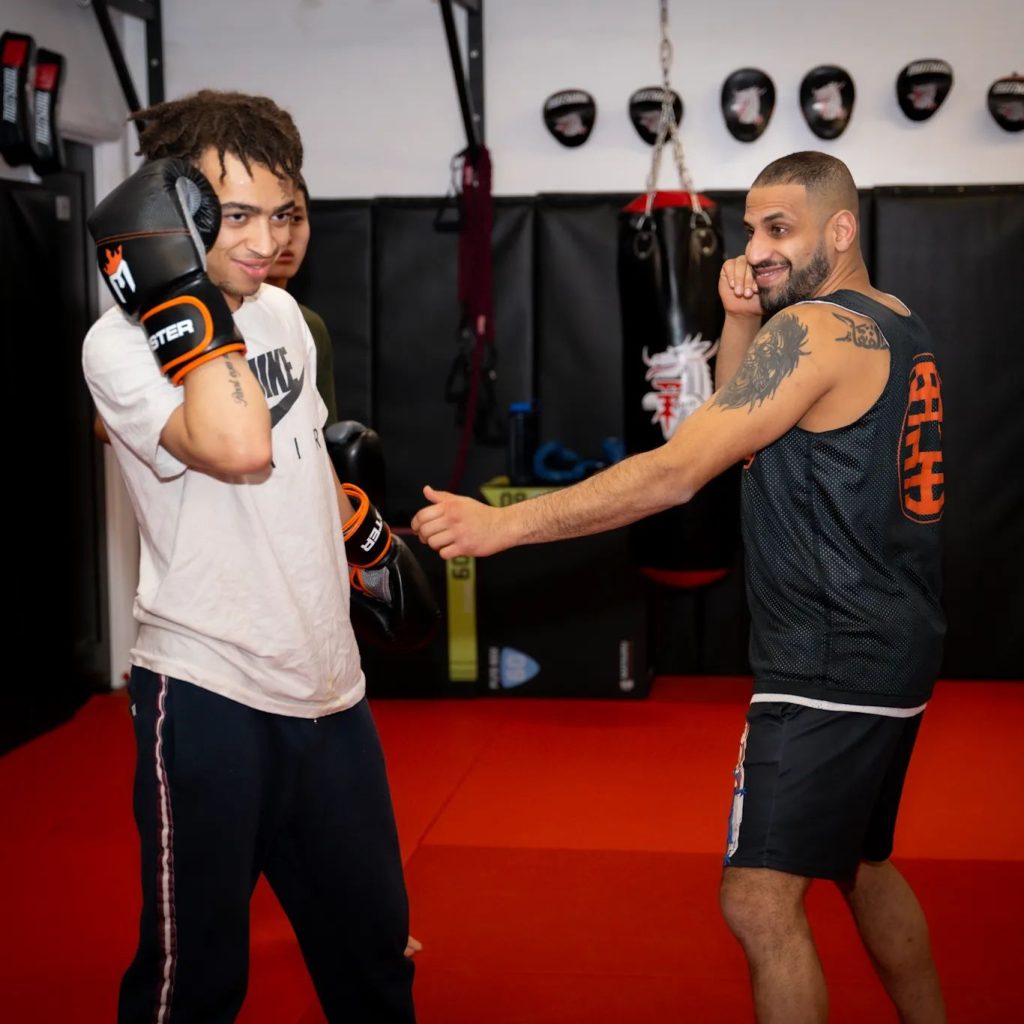

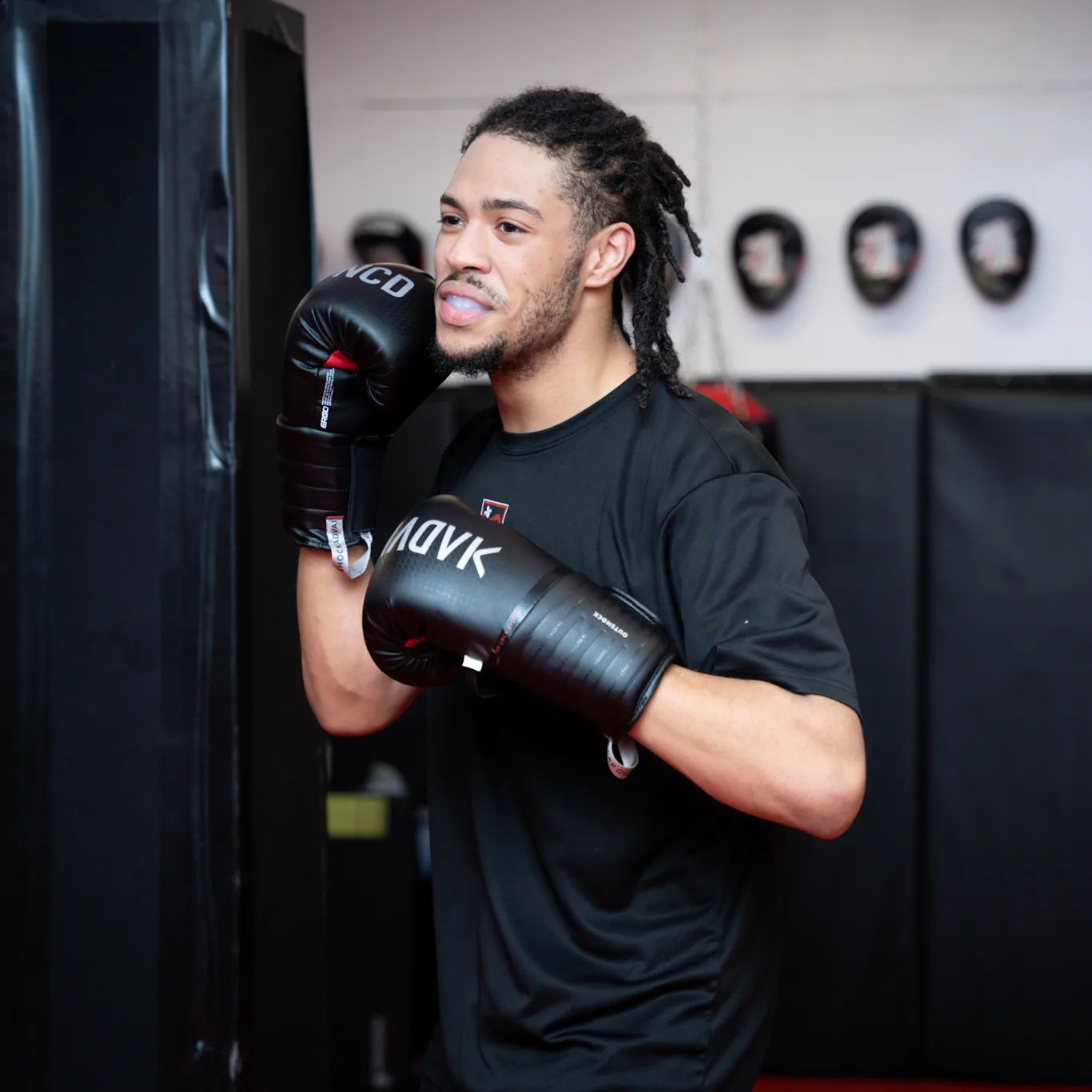
Starting Muay Thai can feel exciting and intimidating at the same time. You may have watched experienced athletes move effortlessly through combinations, deliver powerful kicks to pads, or work through fast-paced drills and wondered how a complete beginner is supposed to keep up.
The answer is simple: you are not expected to keep up with someone who has been training for years.
Your first month of Muay Thai is about learning.
It is a period for becoming familiar with your stance, understanding basic movements, developing coordination, learning gym etiquette, improving your conditioning gradually, and getting comfortable in a completely new training environment.
At Elevate MMA, we welcome adults from Ottawa, Barrhaven, Stittsville, and surrounding communities who are interested in discovering Muay Thai regardless of whether they have previous martial arts experience. Beginners can develop their skills progressively rather than feeling that they need to arrive already knowing how to fight.
So what might those first few weeks actually look like?
Before Your First Muay Thai Class
The hardest part for many beginners happens before they ever step onto the training floor.
They wonder whether they are fit enough.
They worry about looking inexperienced.
They imagine everyone else being faster, stronger, or more coordinated.
Some even postpone starting because they decide they need to “get in shape first.”
But learning Muay Thai is precisely why you are attending.
You would not expect yourself to know how to play an instrument before taking music lessons. Martial arts should be approached with the same mindset.
Your first class is an introduction, not an examination.
Arrive ready to listen, move, and learn.
Week One: Everything Feels New
During your first few classes, expect unfamiliarity.
Even movements that look simple from the outside can feel surprisingly complicated when you attempt them yourself.
You may be thinking about your feet, hands, balance, breathing, and the coach’s instructions simultaneously.
That is normal.
The goal during your first week is not to look polished. It is to begin understanding the basic language of Muay Thai.
Learning Your Stance
Before complicated combinations come the fundamentals.
Your stance affects almost everything you do.
It influences your balance, movement, defence, and ability to strike effectively.
Beginners may initially feel unnatural standing in a Muay Thai stance because it differs from how they normally position themselves during everyday life.
Your coach may help you understand where your feet should be, how your weight should be distributed, and where your hands belong.
These details may seem basic, but they create the foundation for everything that follows.
Getting Comfortable With Your Guard
Keeping your hands where they need to be sounds easy.
Then you begin moving.
You throw a punch and one hand drops.
You concentrate on your feet and forget your guard.
You become tired and your posture changes.
This is why fundamentals require repetition.
During your first month, coaches may remind you about your guard many times.
That does not mean you are doing badly.
It means you are developing a new habit.
Eventually, positions that once required constant thought can begin feeling much more natural.
Your First Punches
Beginners typically start by learning fundamental striking mechanics rather than complicated combinations.
You may work on basic punches and learn how the rest of your body contributes to each movement.
A punch is not simply an arm swinging forward.
Balance, stance, rotation, distance, hand position, and recovery all matter.
Early training gives you time to understand these mechanics before worrying about throwing combinations quickly.
Accuracy and control come before trying to hit as hard as possible.
Discovering That Kicking Is More Technical Than It Looks
Watching an experienced Muay Thai practitioner kick can make the movement appear effortless.
Trying it yourself tells a different story.
You need balance.
You need coordination.
You need to understand how the body rotates.
You also need to recover your position after the strike.
During your first month, kicks may feel awkward.
That is perfectly fine.
Your body is learning a movement pattern it may never have performed before.
Rather than comparing power, focus on understanding the mechanics your coach is teaching.
Learning to Move Without Losing Your Stance
Footwork becomes another early challenge.
Beginners sometimes focus so heavily on striking that they forget their feet.
Muay Thai teaches you to move while maintaining a useful position.
You may practice stepping forward, backward, or laterally while keeping your balance and guard.
At first, you may have to think consciously about every step.
With repetition, movement becomes more coordinated.
This is one of the first examples of how Muay Thai connects the entire body rather than treating each technique as an isolated action.
Your Brain May Feel as Tired as Your Body
One surprise for many beginners is how mentally demanding martial arts can be.
Imagine hearing a combination, watching the coach demonstrate it, remembering the sequence, coordinating your hands and feet, maintaining your stance, and controlling your breathing.
There is a lot happening.
You may occasionally forget what comes next.
You may throw the wrong hand.
You might move in the wrong direction.
These moments are part of learning.
Your brain is developing new movement patterns at the same time your body is adapting to the physical workload.
Pad Work Can Make Training Come Alive
For many students, hitting pads is one of the most enjoyable parts of Muay Thai.
Pads give you a target and allow techniques to become more dynamic.
A coach or training partner may call or present combinations for you to perform.
Suddenly, you are not practicing a movement in isolation.
You need to recognize the target, respond, maintain your balance, and prepare for whatever comes next.
For beginners, pad work can also reveal where technique needs improvement.
You may discover that you lose your stance after a kick or forget your guard after a punch.
That feedback helps guide future practice.
Week Two: Movements Start Becoming Familiar
By the second week, you may still feel very new, but certain parts of class will no longer be completely unfamiliar.
You know where to stand.
You recognize some terminology.
You understand the basic flow of training.
Perhaps your stance feels slightly more comfortable.
You may remember a basic combination without having to think about every individual movement.
These are small changes, but they matter.
Progress during the first month often happens through familiarity rather than dramatic transformations.
Combining Techniques
Once individual movements become somewhat familiar, beginners can start learning how they connect.
Instead of practicing one punch repeatedly, you might begin working on simple combinations.
The challenge changes.
Now you need to transition between movements while maintaining balance and control.
Beginners often rush at this stage because combinations look more impressive when performed quickly.
Slowing down can actually help.
A controlled combination allows you to notice mistakes and understand how one technique prepares you for the next.
Speed can develop later.
Learning Defence Early
Muay Thai is not only about throwing strikes.
Defensive awareness is also important.
Depending on the class and your stage of development, coaches may introduce basic concepts involving guard, distance, movement, blocking, or other defensive responses.
Beginners benefit from learning offence and defence together.
It reinforces the idea that martial arts is not simply about attacking.
You are learning how to understand movement and protect yourself while maintaining control.
Understanding Distance
One of the less obvious skills in striking is understanding range.
Standing too far away can make a technique ineffective.
Being too close can change which options are appropriate.
Beginners often focus primarily on performing the movement itself and only later realize how important distance is.
Training begins developing this awareness.
You start noticing where you need to stand relative to a target.
This is another skill that becomes easier through experience rather than something most people understand immediately.
Your Conditioning Will Be Challenged
Even adults who already exercise may find Muay Thai conditioning different from what they expected.
Running, weight training, cycling, and other activities can build excellent fitness, but martial arts asks the body to work in its own way.
You are moving your feet, maintaining your guard, rotating through strikes, responding to instructions, and repeatedly producing controlled bursts of activity.
Beginners may become tired quickly.
That does not mean you are incapable of training.
Your body is simply adapting to a new type of workload.
Don’t Measure Your First Month by Exhaustion
A hard workout can feel satisfying, but exhaustion should not be your primary measurement of whether training was successful.
Ask yourself what you learned.
Did your stance improve?
Did you understand your kick better?
Did you remember a combination?
Did you maintain your balance more consistently?
Did you listen to a correction and successfully apply it?
Technical improvement is more important than simply leaving every class completely drained.
The objective is to become a better martial arts student, not to compete over who can become the most exhausted.
Week Three: You Begin Connecting the Pieces
Around the third week, many beginners start seeing relationships between skills.
The stance affects the punch.
The punch affects the next strike.
Footwork affects distance.
Distance affects which technique makes sense.
Balance affects almost everything.
What initially felt like a collection of unrelated movements begins becoming a system.
You are still very early in the learning process, but this growing understanding can make training much more rewarding.
Coordination Can Improve Through Repetition
You may notice that movements that initially required intense concentration start becoming smoother.
Perhaps you no longer have to remind yourself which hand goes first in a familiar combination.
Maybe your feet move more naturally.
You might recover your stance more consistently after striking.
These changes happen because the body is becoming familiar with the patterns.
Repetition is doing its job.
That is why consistency during the early stages can be so valuable.
You Start Recognizing Your Own Mistakes
One sign of improvement is not necessarily making fewer mistakes.
Sometimes it is noticing them sooner.
You throw a combination and immediately realize your hand dropped.
You kick and recognize that you lost your balance.
You move backward and notice your stance became too narrow.
This awareness is progress.
At first, the coach identifies nearly everything.
Over time, students begin developing the ability to evaluate themselves.
That makes practice increasingly productive.
Working With Training Partners
As you become more comfortable, partner exercises may become another important part of your experience.
Working with another student teaches skills that cannot be developed entirely on a heavy bag.
You need communication.
You need control.
You need to understand what your partner is practicing and contribute appropriately.
A good training partner is not trying to prove superiority.
Both people should be helping one another improve.
Learning this culture is an important part of becoming comfortable in martial arts.
You Don’t Need to Prove How Tough You Are
Beginners sometimes enter martial arts believing toughness is the most important quality.
That mindset can interfere with learning.
You do not need to hit everything as hard as possible.
You do not need to pretend you understand instructions when you do not.
You do not need to hide fatigue.
And you certainly do not need to turn technical practice into an uncontrolled competition.
Good martial arts training values control.
The student who can perform a technique deliberately and safely is developing something far more useful than someone who simply uses maximum force.
What About Sparring?
Many people considering Muay Thai are nervous about sparring.
They imagine walking into their first class and immediately being expected to fight an experienced student.
That should not be your assumption.
Sparring is a more advanced training tool that can help students develop timing, distance, defence, decision-making, and the ability to apply skills against a responsive partner.
Beginners first need foundations.
Whether and when sparring becomes appropriate depends on coaching, experience, readiness, and the structure of the program.
Your first month should be focused on learning rather than proving yourself in a fight.
Week Four: You Are Still a Beginner—But Not the Same Beginner
After several weeks of consistent training, you will not suddenly become an expert.
You may still forget techniques.
Your conditioning may still have plenty of room to develop.
Some combinations may remain confusing.
But compare yourself with the person who walked into the first class.
That is where the interesting differences appear.
You know more terminology.
You understand the basic structure of training.
You recognize several techniques.
You may move with greater balance.
Your coordination may feel better.
Most importantly, the gym itself no longer feels completely unfamiliar.
Confidence Starts Coming From Familiarity
Before your first class, uncertainty can make martial arts intimidating.
After a month, many of those unknowns have answers.
You know what class feels like.
You know that beginners make mistakes.
You understand that coaches expect students to learn gradually.
You recognize some of the people around you.
This familiarity can create confidence before any advanced martial arts skill has been developed.
Sometimes confidence simply means knowing that you belong in the room.
Your Fitness May Begin Adapting
With regular training, you may notice early changes in how your body responds to class.
Perhaps the warm-up feels more manageable.
You recover between drills more comfortably.
You can maintain your stance longer without feeling as tired.
You may simply feel more accustomed to moving for the duration of the session.
Everyone adapts differently, and one month is still a short period.
Avoid expecting a dramatic physical transformation.
The better objective is building a foundation for continued activity.
Soreness and Recovery Are Part of Starting Something New
Beginning a new physical activity can leave muscles feeling different from what you are accustomed to.
Muay Thai may challenge areas that your previous activities did not use in the same way.
Recovery matters.
Adequate sleep, hydration, appropriate nutrition, and sensible spacing between demanding training sessions can help support your routine.
Pay attention to your body.
Normal post-exercise fatigue is different from pain that may indicate an injury.
If you experience concerning pain or have medical circumstances that affect exercise, appropriate professional medical guidance should take priority.
Long-term consistency matters more than forcing yourself through a problem.
Don’t Try to Train Seven Days a Week Immediately
Enthusiasm is usually highest when an activity is new.
That can lead beginners to overcommit.
You enjoy your first class, so suddenly you want to train every day.
A few days later, your body may disagree.
A sustainable schedule is better than an extreme one.
Give yourself time to adapt.
The ideal frequency will depend on your existing fitness, schedule, recovery, goals, and other responsibilities.
The important thing is establishing a routine you can realistically maintain.
Equipment Doesn’t Need to Be Complicated
Beginners sometimes think they need to purchase an entire collection of professional equipment before their first class.
Start by asking the gym what is required.
Depending on the type of training, equipment may include suitable athletic clothing, boxing gloves, hand wraps, shin protection, a mouthguard, or other protective gear.
Different drills have different requirements.
Getting guidance before buying equipment can save money and ensure that what you purchase is appropriate for training.
Hygiene Is Part of Being a Good Training Partner
Martial arts involves shared spaces and, depending on the activity, close interaction with other people.
Clean training clothes and properly maintained equipment matter.
Personal hygiene matters.
Following the gym’s rules about footwear and training areas matters.
These habits are simple but important.
A good martial arts community depends on students showing consideration for the people training around them.
Ask Questions When Something Doesn’t Make Sense
There is no prize for pretending to understand.
If you are confused about a movement, ask.
If you do not remember which technique comes next, ask.
If you are unsure about the appropriate intensity for a drill, ask.
Questions help coaches understand where students need additional guidance.
They can also prevent beginners from repeatedly practicing a movement incorrectly simply because they were too embarrassed to seek clarification.
You are there to learn.
Questions are part of that process.
Avoid Comparing Yourself With Experienced Students
You will probably train around people who make Muay Thai look easy.
Remember what you are seeing.
You are seeing the result of practice.
You are not seeing their first class.
Comparing your first month with someone else’s several years of experience creates an impossible standard.
Instead, compare your current movement with your own movement a few weeks ago.
Personal improvement is much more useful than trying to match someone else’s timeline.
Your First Month Is About Building Habits
Technique matters, but your earliest training period is also establishing habits.
Are you arriving consistently?
Are you listening when techniques are explained?
Are you practicing with control?
Are you asking questions?
Are you treating partners respectfully?
Are you taking corrections seriously?
Are you giving yourself enough recovery?
These behaviours create the foundation for long-term improvement.
Someone with natural athletic ability but poor training habits may eventually struggle. A beginner who develops patience and consistency gives themselves a much stronger foundation.
What You Probably Won’t Master in One Month
It is worth keeping expectations realistic.
After one month, you probably will not have perfect technique.
You will not understand every defensive situation.
You will not have mastered timing.
Your conditioning will not have reached its full potential.
And you certainly will not have learned everything Muay Thai has to offer.
That is good news.
If everything could be mastered in four weeks, there would be very little reason to continue.
The depth of Muay Thai is part of what makes it interesting.
What You Can Gain in One Month
Although mastery is unrealistic, your first month can still accomplish a great deal.
You can become comfortable entering the gym.
You can understand foundational terminology.
You can begin developing stance and guard.
You can learn introductory punches, kicks, movement, and defensive concepts.
You can experience pad work.
You can improve your awareness of balance and coordination.
You can discover what areas challenge you most.
And you can decide whether Muay Thai is something you want to continue exploring.
That is plenty of progress for the beginning of a much longer journey.
Making Muay Thai Fit a Busy Ottawa-Area Schedule
Adults in Ottawa, Barrhaven, and Stittsville often balance careers, families, commuting, school schedules, and other responsibilities.
Starting martial arts does not mean abandoning those commitments.
The key is making training part of the schedule rather than waiting for a week when nothing else is happening.
That perfect week rarely arrives.
Choose realistic training times.
Protect them where possible.
If life occasionally interferes, return at the next opportunity rather than treating one missed class as the end of the routine.
Consistency over months matters more than perfection from week to week.
Why Muay Thai Can Become More Interesting After the First Month
The first month gives you vocabulary.
After that, you begin having conversations.
Individual techniques start connecting.
You understand why certain movements follow others.
You become more aware of timing and distance.
Defence becomes more meaningful.
Your body becomes better able to perform what your mind understands.
Every improvement reveals something else to learn.
That cycle is one of the reasons Muay Thai can remain engaging long after the excitement of starting a new activity has passed.
From Nervous Beginner to Regular Student
There is a satisfying moment when you realize the gym no longer feels new.
You walk in knowing where things are.
You recognize familiar faces.
You understand how class works.
A brand-new student may arrive looking uncertain, and suddenly you realize that was you only a short time ago.
You are still learning.
You are still making mistakes.
But you have crossed an important threshold.
You started.
That is something many people spend months or years thinking about without ever doing.
Start Your First Month of Muay Thai at Elevate MMA
At Elevate MMA, we provide Muay Thai training for adults who want to learn in a structured environment while developing technique, coordination, conditioning, confidence, and a deeper understanding of martial arts.
If you are in Ottawa, Barrhaven, Stittsville, or a surrounding community and have never trained before, being a beginner is not something you need to apologize for.
It is simply your starting point.
Your first month does not need to be about throwing the hardest kick, completing the most advanced combination, or keeping pace with experienced students.
It can be about something much more achievable: showing up consistently, learning the fundamentals, becoming comfortable with the training environment, and getting a little better each time you step onto the mat.
Four weeks from now, you may still be a beginner.
But you will be a beginner with four weeks of experience you did not have today.